 Save to Pinterest
 The way my grandmother's house smelled on Sunday afternoons is forever burned into my memory—that heavy, comforting aroma of beef and vegetables slowly transforming into something extraordinary. I've spent years trying to recreate that magic, adjusting temperatures and timing until I found the sweet spot between tender meat and vegetables that actually hold their shape. There's something profoundly satisfying about a dish that rewards patience so generously.
Last winter, during that terrible week when the pipes froze and we were all stuck inside, I made this pot roast for my neighbors who had no power. We huddled around my dining table with candles and this massive pot of beef, eating off mismatched plates and laughing about how terrible we all are at winter weather. Food has this way of turning emergencies into memories you actually want to keep.
Ingredients
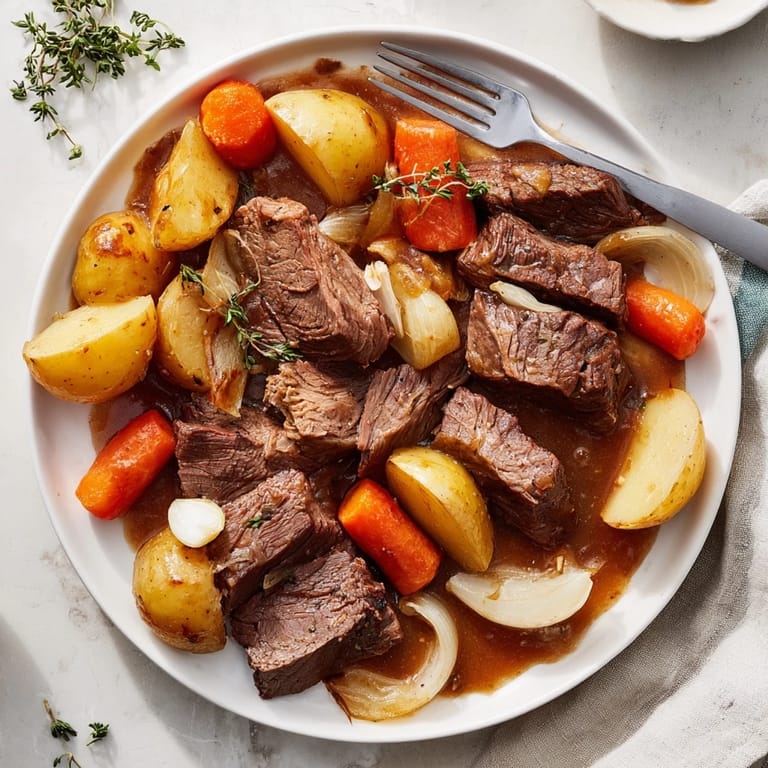
- Chuck roast (3-4 lb): The marbling is essential here—it melts into the meat during braising and creates that silky texture
- Kosher salt and black pepper: Don't be shy with the seasoning; this is a big cut of meat and can handle a generous hand
- Olive oil: You need the fat for proper searing, which builds the flavor foundation for everything that follows
- Yukon Gold potatoes: They hold their shape better than Russets and have this naturally buttery flavor
- Large carrots: Cut them into substantial chunks so they don't dissolve into the sauce
- Yellow onions: Quartered so they caramelize slightly while staying recognizable
- Garlic cloves: Smashed releases more flavor than mincing for long cooking times
- Beef broth: The liquid backbone of your braise—homemade is ideal but quality store-bought works beautifully
- Dry red wine: Adds depth and acidity that cuts through the rich meat
- Tomato paste: Concentrated umami that deepens the gravy color and flavor
- Worcestershire sauce: That secret ingredient nobody can quite identify but everyone notices
- Dried thyme and bay leaves: Classic herbs that complement beef without overpowering it
- Flour or cornstarch: For thickening the gravy at the end—cornstarch makes it glossy, flour gives it body
Tired of Takeout? 🥡
Get 10 meals you can make faster than delivery arrives. Seriously.
One email. No spam. Unsubscribe anytime.
Instructions
- Get your oven ready:
- Preheat to 300°F—this low temperature is what breaks down the connective tissue into magic.
- Season the beef:
- Pat the roast completely dry with paper towels, then season generously with salt and pepper on all sides.
- Build your flavor base:
- Heat oil in a large Dutch oven over medium-high heat and sear the roast 4-5 minutes per side until deeply browned—this step is not negotiable.
- Sauté the aromatics:
- Cook onions and garlic for 2-3 minutes until fragrant, then stir in tomato paste and let it cook for one full minute.
- Deglaze the pot:
- Pour in the wine and scrape up every browned bit from the bottom—that's where the flavor lives.
- Assemble everything:
- Return the beef to the pot, add broth, Worcestershire, thyme, and bay leaves, then arrange potatoes and carrots around the meat.
- The long wait:
- Cover tightly and braise for 3 to 3½ hours until the beef yields easily to a fork.
- Make the gravy:
- Remove meat and vegetables, skim excess fat, whisk flour with cold water until smooth, then stir into the liquid and simmer until thickened.
 Save to Pinterest
 My sister called me in tears once because she'd burned her pot roast, and I talked her through rescuing it with extra broth and patience. Now she makes a better version than I do, which she reminds me of every single time we're together. That's how recipes become family lore—they survive the mistakes and get passed down with the stories attached.
Choosing Your Cut
I've learned the hard way that lean cuts turn into leather after three hours in the oven. Chuck shoulder is the gold standard for pot roast because it has just the right amount of connective tissue that melts into gelatin during braising. Look for marbling throughout—the white threads of fat running through the meat are what make it fork-tender and incredibly flavorful.
The Vegetable Timing
Early attempts at pot roast left me with vegetables that disintegrated into nothingness while I waited for the meat to finish. Now I cut everything into large, generous chunks that can withstand hours of cooking without turning to mush. If you're worried about the carrots getting too soft, add them about an hour before the roast finishes instead of at the beginning.
Making It Your Own
The basic formula is forgiving once you understand the technique, and that's when cooking becomes creative instead of stressful.
- Add parsnips or turnips with the potatoes for earthy sweetness
- Stir in a splash of balsamic vinegar during the last hour for brightness
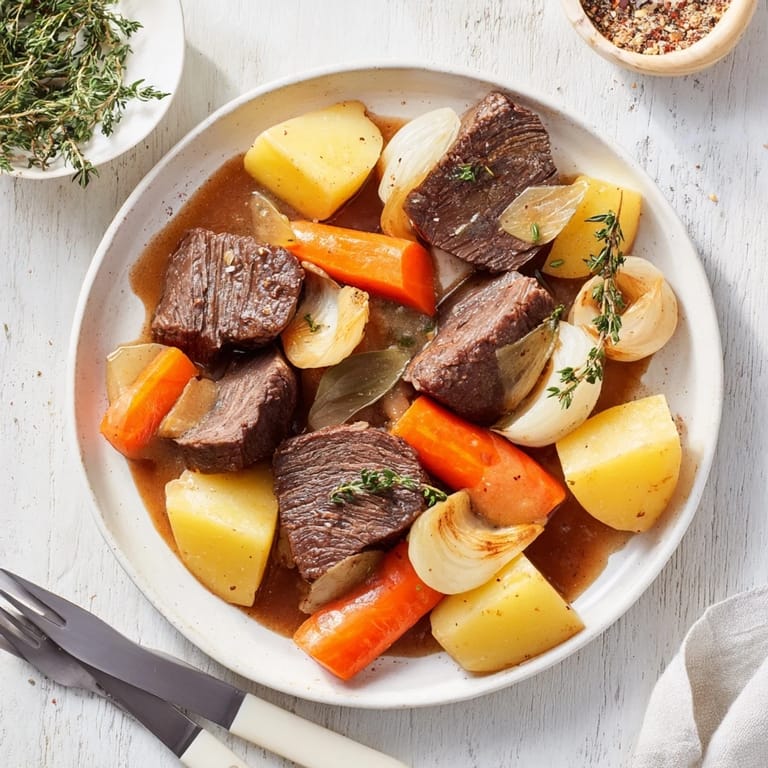
- Try pearl onions instead of quartered for a more elegant presentation
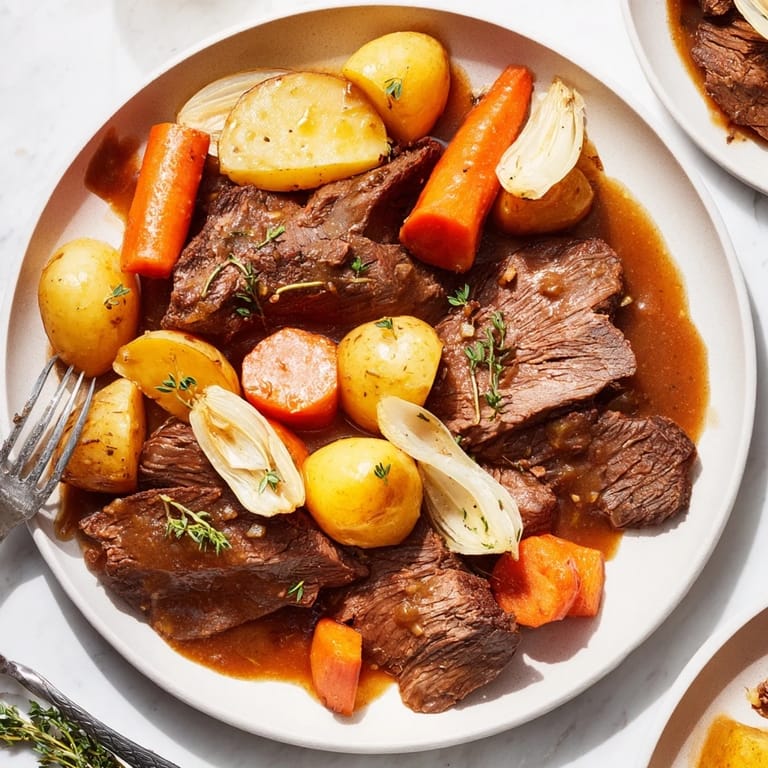 Save to Pinterest
 There's no feeling quite like pulling that lid off after hours of anticipation and seeing something so deeply comforting. I hope this becomes one of those recipes you make without thinking, the one your family asks for by name.
Recipe Q&A
- → What cut of beef works best for pot roast?
Chuck roast is ideal because it becomes tender and flavorful through slow cooking. The marbling breaks down during braising, creating melt-in-your-mouth results.
- → Can I make pot roast in a slow cooker?
Yes. Sear the beef first, then transfer everything to your slow cooker. Cook on low for 8-10 hours or high for 4-6 hours until fork-tender.
- → How do I know when the pot roast is done?
Insert a fork into the thickest part. When it slides in easily with no resistance and the meat shreds apart, it's perfectly done.
- → Can I freeze pot roast leftovers?
Absolutely. Cool completely, then store in airtight containers for up to 3 months. Thaw overnight in the refrigerator before reheating gently on the stovetop.
- → What vegetables can I add to pot roast?
Parsnips, celery root, turnips, or butternut squash work beautifully. Add hearty vegetables during the last 2 hours of cooking so they don't become mushy.
- → Do I need the red wine?
No. Substitute with additional beef broth for a delicious result. The wine adds depth and acidity, but the dish remains flavorful without it.