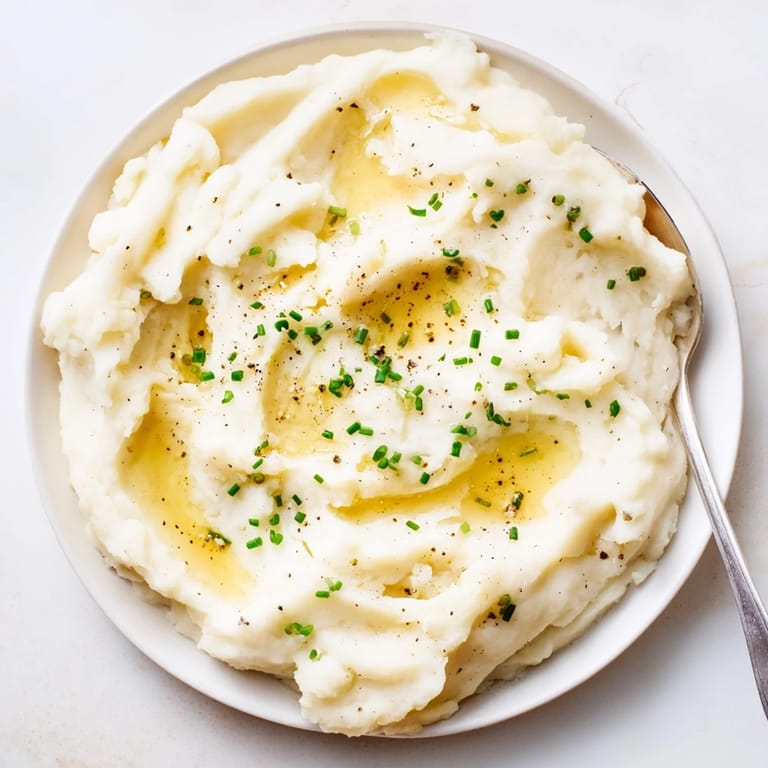
 Save to Pinterest
 There's something almost meditative about standing at the stove, steam rising from a pot of boiling potatoes, butter softening on the counter. I've found myself returning to this recipe repeatedly over the years, through dinner parties and quiet Tuesday nights alike. The first time I nailed truly creamy mashed potatoes, I couldn't believe I'd spent years accepting lumpy, gluey versions as normal.
Last Thanksgiving, my usually skeptical brother took one bite and quietly went back for thirds before asking what I'd done differently. That's when I realized the difference wasn't a secret ingredient, it was simply patience and warming the milk before adding it. The small details matter more than we think.
Ingredients
- Yukon Gold or Russet potatoes: I've tried countless potato varieties, and these two consistently yield the fluffiest results with the best natural starch content
- Unsalted butter: Room temperature butter incorporates more smoothly, and starting with unsalted lets you control the seasoning precisely
- Whole milk: Warming the milk beforehand prevents shocking the hot potatoes and helps maintain that silky texture
- Salt and pepper: Seasoning the cooking water is the hidden step that flavors the potatoes from inside out
Tired of Takeout? 🥡
Get 10 meals you can make faster than delivery arrives. Seriously.
One email. No spam. Unsubscribe anytime.
Instructions
- Start the potatoes right:
- Place your potato chunks in a large pot and cover completely with cold, salted water before turning on the heat
- Cook until perfectly tender:
- Bring everything to a boil over high heat, then reduce to a gentle simmer and cook for 15 to 20 minutes until a fork slides through easily
- Let them breathe:
- Drain thoroughly and return the potatoes to the warm pot, letting excess steam escape for 2 to 3 minutes so they don't hold too much moisture
- Add the dairy:
- Pour in your warm milk and add the room temperature butter before you start mashing
- Mash to perfection:
- Use a potato masher or ricer, working until the potatoes are smooth and creamy but not overworked
- Season and serve:
- Taste and adjust salt and pepper as needed, then transfer to a serving bowl and garnish if you like
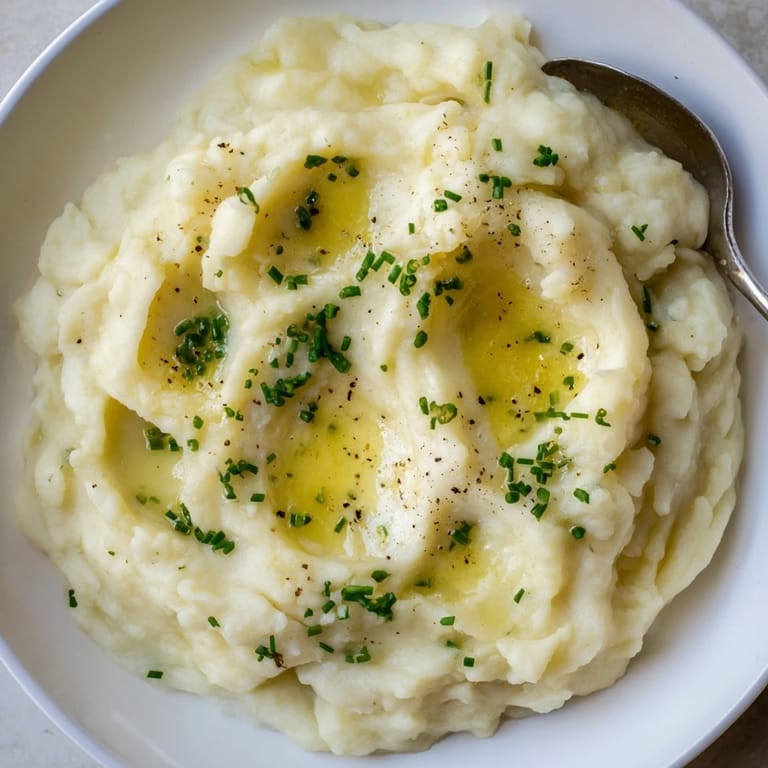 Save to Pinterest
 My grandmother always said you can tell a cook by their mashed potatoes, and I've come to understand what she meant. It's not about complexity, it's about attention to those small moments that transform simple food into something people remember.
Choosing Your Potato
Yukon Golds have a naturally buttery flavor and slightly waxy texture that holds up beautifully. Russets starch more heavily and create fluffier results, though they can absorb more liquid. I keep both on hand depending on my mood.
Texture Secrets
A potato ricer creates the smoothest results by forcing potatoes through tiny holes, essentially pre mashing them. If you only have a masher, work gently and avoid pressing too vigorously, which can activate too much starch.
Make Ahead Wisdom
You can prepare these up to two hours before serving, keeping them warm in a heatproof bowl set over simmering water. Stir in a splash of warm milk before serving to restore creaminess if they've tightened up.
- Never use a food processor or blender, which will turn potatoes into a gummy mess
- If potatoes seem too thick, add warm milk one tablespoon at a time
- Leftovers reheat surprisingly well with a little extra butter and milk
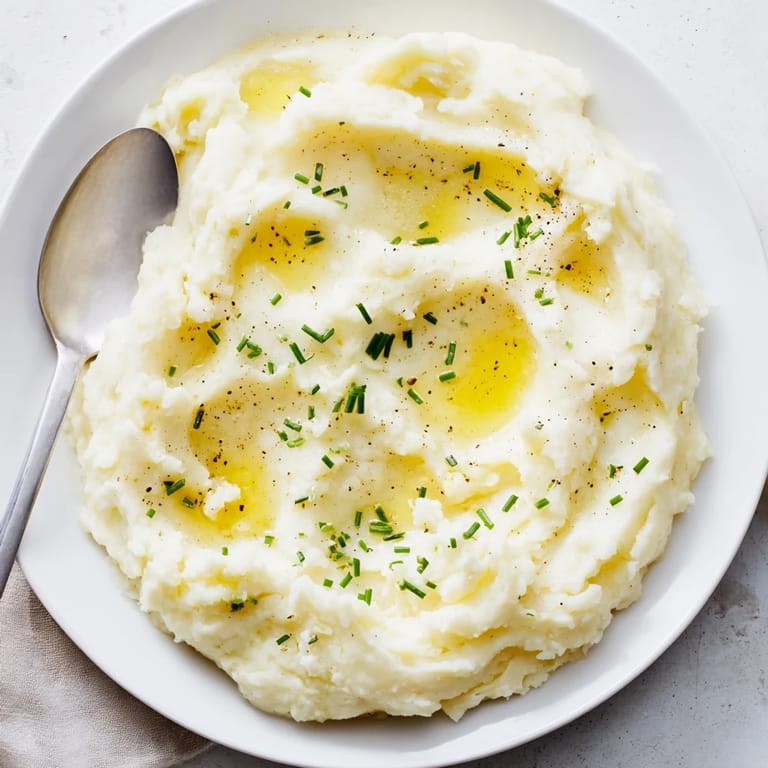 Save to Pinterest
 Perfect mashed potatoes are worth mastering because they make almost any meal feel like a special occasion. Sometimes the simplest dishes bring the most comfort.
Recipe Q&A
- → What type of potatoes work best?
Yukon Gold potatoes yield naturally creamy results with their medium starch content and buttery flavor. Russet varieties create fluffier textures due to higher starch content. Both produce excellent mashed potatoes when prepared properly.
- → Why use warm milk?
Warm milk incorporates more smoothly than cold, preventing the potatoes from becoming gummy or cooling down too quickly. The warmth helps maintain ideal temperature throughout mashing while ensuring even distribution of dairy throughout the mixture.
- → How can I make them extra creamy?
Add 2 tablespoons of heavy cream or sour cream along with the butter and milk. Using a potato ricer instead of a masher creates finer, smoother textures. Avoid over-mixing which can develop gluten and result in gluey consistency.
- → Can I prepare these in advance?
Yes, mash the potatoes up to 2 hours before serving. Store covered, then reheat gently over low heat, adding a splash of warm milk to restore creaminess. Alternatively, keep warm in a slow cooker on the lowest setting for up to 2 hours.
- → What herbs pair well?
Fresh chives add mild onion flavor and vibrant color. Parsley provides bright, herbal notes. Try thyme or rosemary for earthy depth. Stir herbs in gently after mashing to preserve their delicate texture and fresh flavor.
- → Are these suitable for dietary restrictions?
Naturally gluten-free and vegetarian. For dairy-free versions, substitute butter with olive oil or vegan butter and replace whole milk with unsweetened almond, oat, or cashew milk. The texture remains delicious while accommodating various dietary needs.