 Save to Pinterest
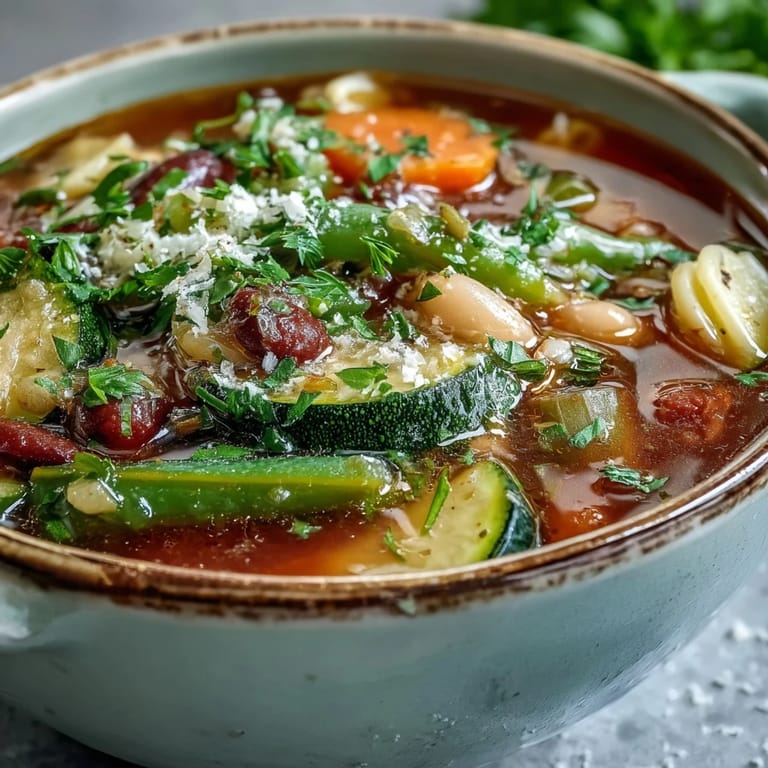
 My neighbor Maria taught me that minestrone isn't something you follow a recipe for, it's something you build while chatting over the counter. She'd wave her hand dismissively at measurements, tossing in whatever vegetables needed rescuing from her crisper drawer, then add pasta and beans until it felt right. The first time I made it alone, I was terrified I'd ruin it, but the moment that broth turned a warm tomato-gold and filled my kitchen with the smell of oregano and basil, I understood what she meant.
Years ago, I made this for friends who'd just moved into their first apartment, which had a kitchen barely bigger than a closet. We crowded around their tiny table with oversized bowls, and someone said it tasted like home even though none of us had grown up eating minestrone. That's when I realized this soup does something special, it tastes like care in a way that fancy dishes sometimes miss.
Ingredients
- Olive oil: Start with good oil because it carries the flavor of everything that cooks in it, though you don't need the most expensive bottle.
- Onion, carrots, and celery: This trio is called soffritto, the aromatic foundation that makes the whole soup taste like someone who knows what they're doing made it.
- Garlic: Mince it small so it dissolves into the broth rather than sitting in chunks.
- Zucchini and green beans: These stay tender and slightly sweet, adding brightness without overpowering the soup.
- Spinach or kale: Add it at the very end so the leaves stay vibrant green and don't turn dark and tired.
- Diced tomatoes: Canned is perfectly fine and sometimes better than fresh because the flavor is already concentrated.
- Vegetable broth: Use the best broth you can find because it's the body of everything else that follows.
- Dried herbs: Oregano, basil, and thyme work together like a seasoning choir, each voice distinct but part of the same song.
- Bay leaf: Fish this out before serving because nobody enjoys a surprise leaf in their spoon.
- Small pasta: Ditalini works beautifully, but elbow pasta or small shells do just as well, absorbing the broth without falling apart.
- Cannellini and kidney beans: Draining and rinsing them removes excess starch and makes the broth stay clear instead of cloudy.
- Parmesan and fresh parsley: These are optional but wonderful, adding a salty richness and fresh green note right at the end.
Tired of Takeout? 🥡
Get 10 meals you can make faster than delivery arrives. Seriously.
One email. No spam. Unsubscribe anytime.
Instructions
- Build your flavor base:
- Heat oil in a large pot and add your onion, carrots, and celery, letting them soften for about five minutes until the kitchen starts smelling like an Italian grandmother's kitchen. You'll notice the vegetables release their own liquid and start to get tender, which means they're ready for the next step.
- Welcome the aromatics:
- Stir in the garlic, zucchini, and green beans, cooking just long enough for the garlic to become fragrant and the raw edge to soften. This takes maybe three to four minutes, and you'll know it's done when you can't resist standing over the pot.
- Add the tomato foundation:
- Pour in the diced tomatoes, vegetable broth, and all your dried herbs along with the bay leaf, then bring everything to a boil. The broth will turn from clear to a warm peachy-red color as the tomatoes break down and marry with the other ingredients.
- Let it simmer and marry:
- Lower the heat to a gentle simmer, cover the pot, and let it cook undisturbed for about fifteen minutes so the flavors start actually knowing each other. This is a good moment to pour yourself something to drink or set the table.
- Introduce the pasta and beans:
- Stir in the pasta and both types of beans, then cook uncovered for ten to twelve minutes until the pasta reaches that perfect just-tender point called al dente. Taste a piece of pasta as it cooks, because pasta continues to soften even after you stop cooking.
- Finish with greens:
- Toss in your spinach or kale and let it wilt for two to three minutes, which takes almost no time and transforms the soup into something that looks and tastes alive. Remember to fish out that bay leaf before you ladle it into bowls.
- Season and taste:
- Taste the soup and adjust the salt and pepper to your preference, keeping in mind that Parmesan will add saltiness if you're planning to use it.
 Save to Pinterest
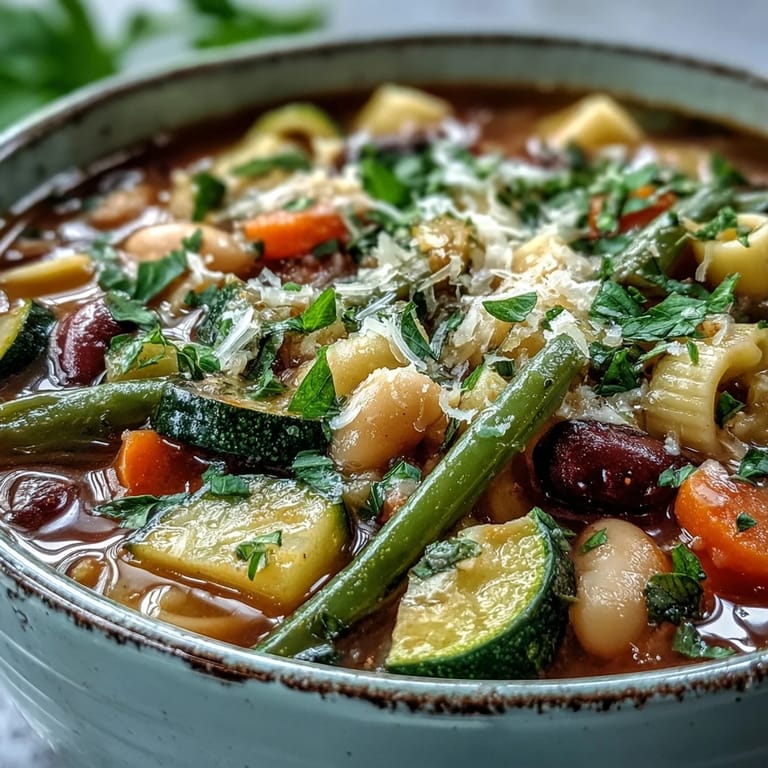
 My daughter once asked why this soup tasted like every good meal we'd ever eaten, and I didn't have a good answer until I realized minestrone is one of those dishes that works because it's honest. There's nothing tricky about it, just good vegetables, good broth, and patience.
Why This Soup Always Works
Minestrone succeeds because it treats vegetables as heroes instead of supporting characters. The vegetables cook down enough to contribute their essence to the broth while staying intact enough to provide texture, which is the kind of balance that takes intention to achieve. Once you understand that timing is everything in this soup, you've learned something that applies to nearly every other thing you'll cook.
Making It Your Own
The beauty of minestrone is that it was born from the Italian principle of using what's on hand, so feel completely free to swap vegetables based on your season or your mood. Potatoes add earthiness and starch, cabbage adds substance and a slight sweetness, peas bring a pop of color and nostalgia, and even diced tomato paste stirred in during the simmering stage deepens the flavor. The soup welcomes these changes like an old friend adapting to new company.
Serving and Storing Your Minestrone
Serve this soup while it's steaming hot, with a chunk of crusty bread for soaking up the broth and, if you're feeling it, a glass of light red wine like Chianti that echoes the tomato flavors. Minestrone actually improves with time, so leftovers taste even better the next day after everything has gotten to know each other in the refrigerator. If you're storing it, keep the pasta and vegetables separate from the broth if you can, because the pasta will continue absorbing liquid and eventually disappear into mush, but most home cooks just store it all together and eat it faster anyway.
- Reheat gently on the stovetop rather than the microwave to keep the broth from breaking and the vegetables from turning to mush.
- The soup keeps in the refrigerator for about four days and freezes beautifully for up to three months if you haven't added the fresh herbs yet.
- Add fresh parsley and a drizzle of olive oil right before serving so they taste bright and haven't given up their personality to the heat.
 Save to Pinterest
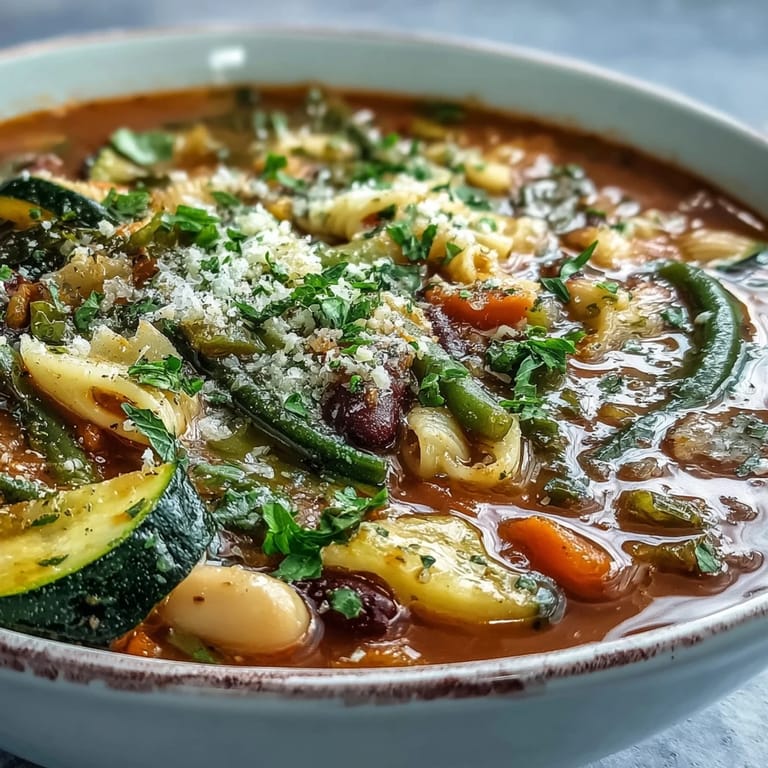
 Make this soup when you want to feel like you've cooked something that matters, because minestrone isn't fancy but it is honest, and that's something worth making again and again. Every time you do, it tastes a little more like home.
Recipe Q&A
- → Can I use different vegetables in minestrone?
Absolutely! Minestrone is very flexible. You can add potatoes, cabbage, peas, bell peppers, or whatever seasonal vegetables you have on hand. The key is to maintain a good balance of textures and flavors.
- → What type of pasta works best?
Small pasta shapes like ditalini, elbow macaroni, small shells, or orzo work perfectly. They cook evenly in the broth and are easy to eat with a spoon. Just ensure they're al dente to prevent mushiness.
- → How do I make this soup vegan?
Simply omit the Parmesan cheese garnish or use a plant-based alternative. The rest of the ingredients are already plant-based, making it naturally vegan-friendly with this small adjustment.
- → Can I prepare minestrone ahead of time?
Yes! This soup actually tastes better the next day as flavors meld together. Store it in the refrigerator for up to 4 days. Note that pasta may absorb liquid, so add extra broth when reheating if needed.
- → What should I serve with minestrone?
Crusty Italian bread or garlic bread pairs wonderfully for dipping. A simple green salad and a light red wine like Chianti complete the meal beautifully for an authentic Italian dining experience.
- → Can I freeze minestrone soup?
Yes, but it's best to freeze it before adding the pasta, as pasta can become mushy when frozen and reheated. Add freshly cooked pasta when you reheat the frozen soup base.