 Save to Pinterest
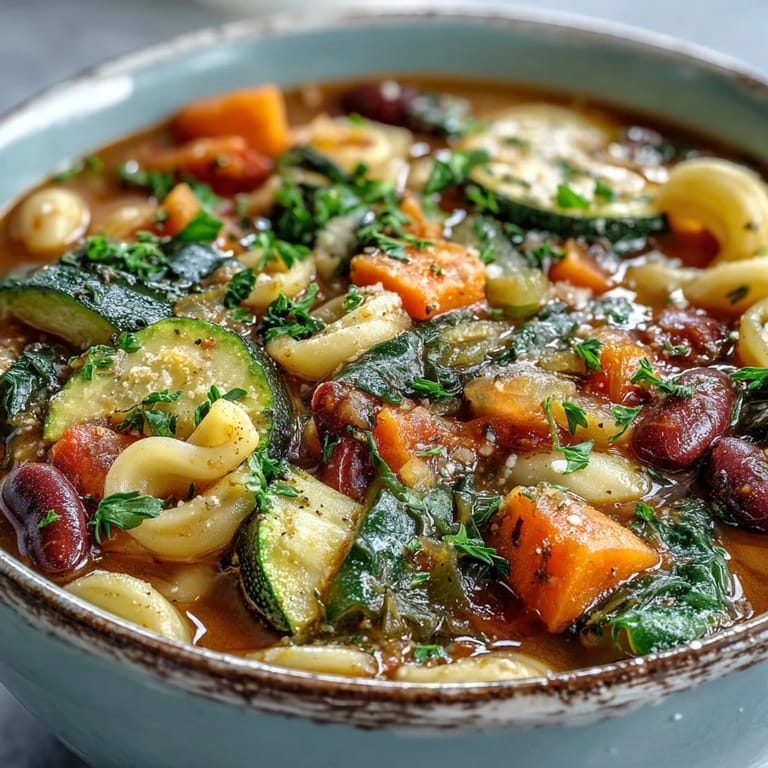
 My neighbor Marco handed me a steaming bowl of minestrone one rainy Tuesday, insisting it was the cure for my terrible week. I watched him ladle it with such care, making sure each spoonful had vegetables, pasta, and beans in perfect balance. That first sip, with the herbaceous warmth and the soft pasta yielding between my teeth, made everything feel manageable again. It wasn't fancy or complicated, just honest food that tasted like someone actually cared. I asked for the recipe that same evening.
I made this for my book club last month, doubling the recipe because I wasn't sure six servings would stretch far enough. Everyone was so busy chatting and reaching for second bowls that we barely got through chapter three. One of them, Sarah, asked if I'd used some fancy stock, and I loved telling her it was just vegetable broth and time. That's when I realized minestrone teaches you something important about cooking: the best meals don't need to be complicated, they just need to be made with intention.
Ingredients
- Olive oil: Use a good quality oil here, not the cheapest bottle on the shelf, because it's one of the few ingredients doing the flavor work early on.
- Onion, celery, and carrots: This is your aromatic holy trinity, and I always dice them roughly the same size so they soften evenly.
- Garlic: Mince it fresh and add it after the softer vegetables so it doesn't burn and turn bitter.
- Zucchini and green beans: These add texture and freshness, and they're forgiving if your knife skills aren't perfect.
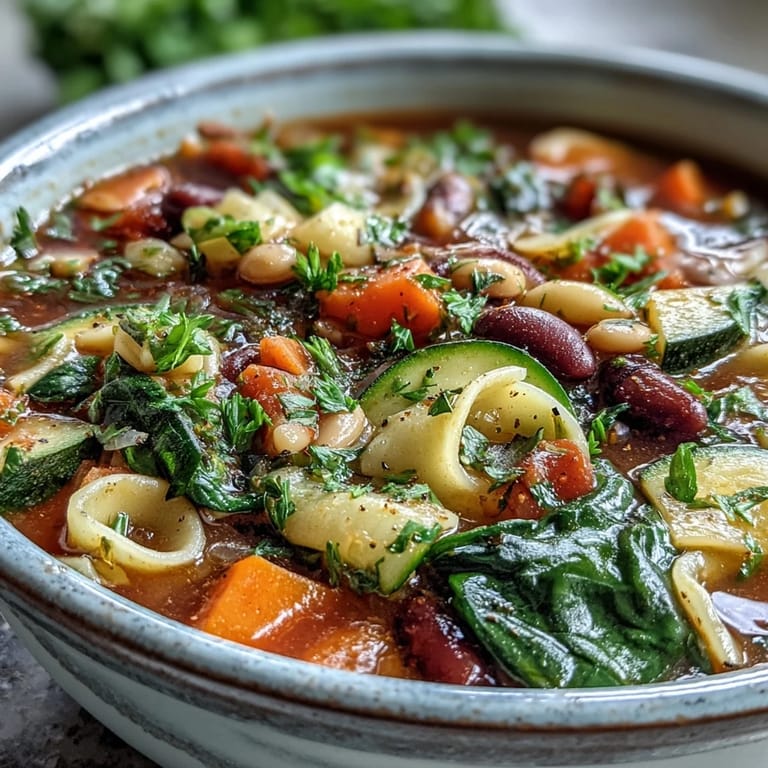
- Baby spinach or kale: Add it at the very end so it stays vibrant and doesn't dissolve into the broth.
- Diced tomatoes: Canned is absolutely fine here, sometimes better than fresh because the flavor is concentrated.
- Vegetable broth: This is the backbone of everything, so don't use broth that tastes like sadness.
- Tomato paste: A small amount adds depth without making the soup taste like tomato soup in disguise.
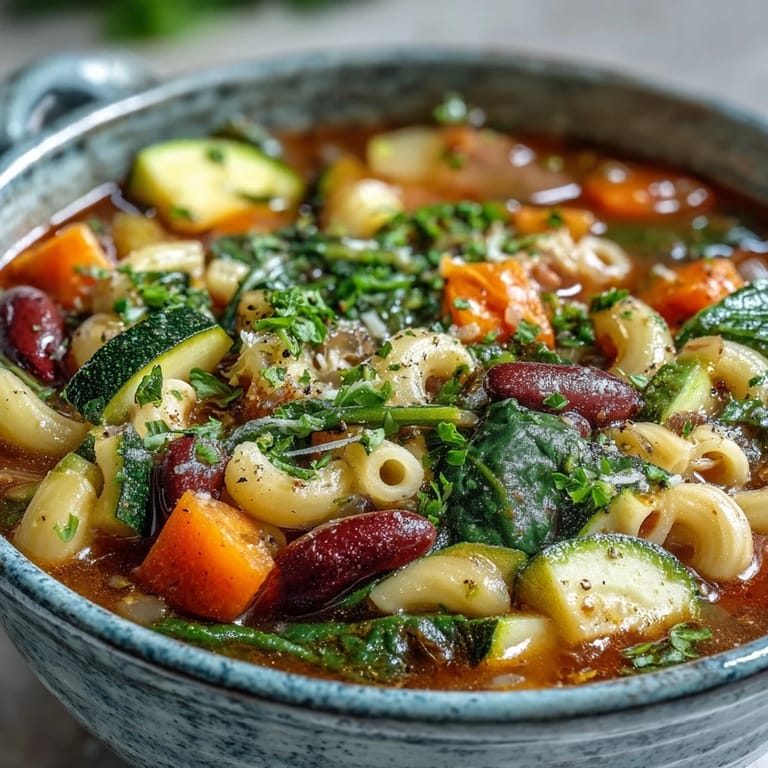
- Pasta: Small shapes like ditalini or elbow work best so they don't overwhelm the vegetables.
- Beans: Cannellini are traditional, but kidney beans work just as well, and they add protein and creaminess.
- Herbs: Dried oregano, basil, and thyme are your flavor anchors, and fresh parsley at the end brings everything to life.
- Bay leaf: Remove it before serving, trust me on this, nobody wants a surprise leaf in their spoonful.
Tired of Takeout? 🥡
Get 10 meals you can make faster than delivery arrives. Seriously.
One email. No spam. Unsubscribe anytime.
Instructions
- Build your flavor base:
- Heat the olive oil in a large pot and add your diced onion, celery, and carrots, letting them get soft and sweet for about five minutes. You'll know it's working when the kitchen starts smelling like a grandmother's kitchen should.
- Add the aromatic layers:
- Stir in the garlic, zucchini, and green beans, cooking for a few minutes until everything gets fragrant and the garlic softens. The vegetables should be glossy from the oil and just beginning to release their flavors.
- Create the soup's heart:
- Pour in the diced tomatoes, tomato paste, vegetable broth, and all your dried herbs along with the bay leaf. Bring it to a boil, then back it down to a gentle simmer and let it bubble quietly for about fifteen minutes, which is when the flavors start actually talking to each other.
- Add the pasta and beans:
- Stir in your pasta and drained beans, cooking until the pasta is tender but still has a little bite to it, about ten minutes. Taste a noodle to check, because there's nothing worse than mushy pasta in soup.
- Finish with freshness:
- Toss in the spinach or kale along with the fresh parsley, letting it wilt into the warm broth for just a couple minutes. The soup will suddenly look brighter and taste more alive.
- Season and serve:
- Fish out the bay leaf, then taste and season with salt and pepper until it tastes like something you actually want to eat. Ladle it into bowls and finish with extra parsley and maybe a drizzle of good olive oil.
 Save to Pinterest
 My daughter helped me make minestrone for her school potluck, and she insisted on arranging the vegetables in the cutting board in a rainbow. Her careful pride in that small task, the way she carried the pot to the car like it held treasure, reminded me that cooking together is where some of the best conversations happen. We didn't talk about anything revolutionary, just her day and my day and the soup, but I wouldn't trade those quiet moments for anything.
The Magic of Vegetables at Their Own Pace
The real secret to minestrone is understanding that vegetables don't all want to cook at the same speed, and respecting that makes the difference. The carrots, celery, and onion need their five minutes to soften and mellow, which is when the soup stops being raw and starts becoming something cohesive. By adding the quicker cooking vegetables later, you ensure everything finishes at the right moment instead of having some mushy pieces and some raw ones.
When to Trust Your Instincts About Substitutions
This recipe is genuinely flexible because minestrone is a soup born from using what you have on hand. I've made it with roasted red peppers, butternut squash, canned white beans, even a handful of frozen peas when nothing fresh was available. The herbs and broth are what make it minestrone, not any specific vegetable, so swap freely based on what's seasonal or what you need to use before it spoils.
Serving and Keeping It Better
Minestrone is one of those soups that genuinely improves after sitting overnight, so don't hesitate to make it ahead and reheat it gently. The flavors settle and deepen in a way that feels almost mysterious, like the soup got smarter while you slept. It also freezes beautifully, though I prefer to freeze it without the pasta and add fresh noodles when I thaw and reheat.
- Serve it hot with a piece of crusty bread and maybe a generous grating of Parmesan if you're not vegan.
- A small drizzle of quality olive oil on each bowl elevates the whole experience without much effort.
- If you're meal prepping, keep the pasta separate and add it fresh when you reheat, so your soup stays vibrant and properly textured.
 Save to Pinterest
 Minestrone taught me that the best meals are the ones that nourish without demanding, that satisfy without pretending to be something fancy. There's real kindness in a bowl of this soup, and you can taste it.
Recipe Q&A
- → Can I use different vegetables in minestrone?
Absolutely! Minestrone is wonderfully adaptable. Swap seasonal vegetables like bell peppers, cabbage, potatoes, or butternut squash. Just maintain similar cooking times for best texture.
- → What type of pasta works best?
Small pasta shapes like ditalini, elbow macaroni, or small shells work perfectly. They cook evenly in the broth and are easy to eat with a spoon. For gluten-free, use certified gluten-free pasta.
- → Can I make this soup ahead of time?
Yes! Minestrone tastes even better the next day. Store in the refrigerator for up to 4 days. Note that pasta will absorb liquid, so add extra broth when reheating if needed.
- → How do I make it vegan?
This soup is naturally vegetarian. To make it fully vegan, simply skip the Parmesan garnish or use vegan Parmesan. Ensure your vegetable broth and pasta contain no animal products.
- → Can I freeze minestrone soup?
Yes, but for best results, freeze without the pasta. Cook pasta fresh when reheating. Freeze in airtight containers for up to 3 months. Thaw overnight and reheat gently on the stovetop.
- → What can I serve with this soup?
Crusty Italian bread, garlic bread, or focaccia are traditional accompaniments. A simple green salad with vinaigrette makes it a complete, satisfying meal.