 Save to Pinterest
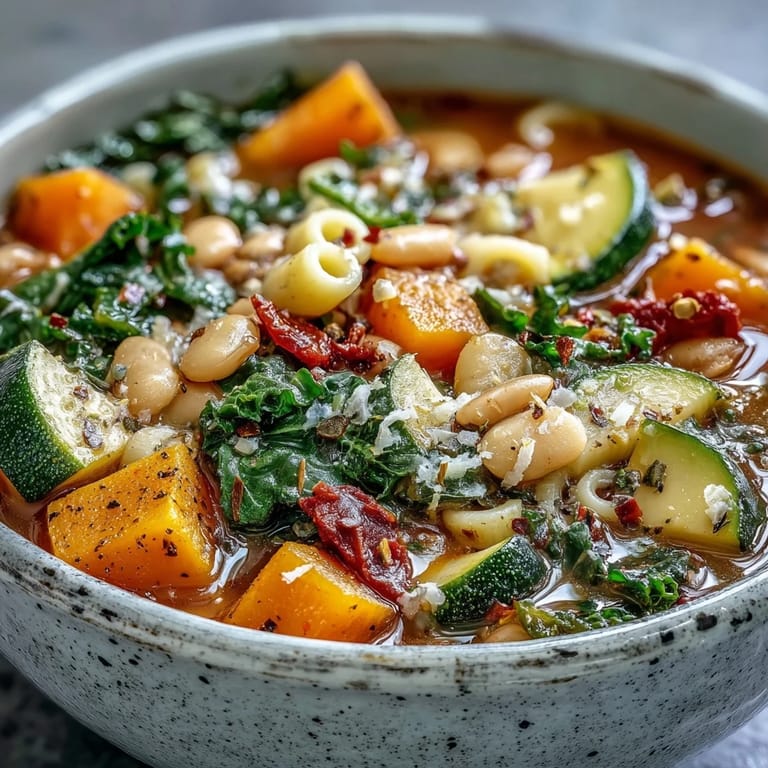
 There's something about the smell of butternut squash hitting hot oil that makes me pause whatever I'm doing. My kitchen filled with that sweet, nutty aroma on a November afternoon, and suddenly I wasn't just cooking soup—I was building something warm to share. This minestrone came together almost by accident, really, just vegetables I had on hand and a need for something that felt both nourishing and unpretentious.
I made this for my neighbor last January when her car broke down and she was stuck at home. She came over for tea, and I ended up ladling bowl after bowl across my kitchen counter, watching her shoulders relax a little with each spoonful. That's when I knew this recipe was worth keeping—not because it was complicated, but because it did exactly what it promised.
Ingredients
- Olive oil: Two tablespoons is your foundation, enough to coat the bottom of a large pot without drowning your vegetables—good quality makes a noticeable difference in the finish.
- Yellow onion: One medium onion diced creates the flavor base, and there's no substitute for this moment when the pieces start turning translucent and sweet.
- Carrots and celery: Two of each, sliced, form the holy trinity alongside the onion and deliver natural sweetness and body to the broth.
- Garlic: Three cloves minced add that savory depth that makes people ask what's in this soup—the answer is partly just patience with garlic.
- Butternut squash: Three cups peeled and cubed provide creaminess without cream and a gentle earthiness that balances everything else.
- Zucchini: One medium zucchini diced adds volume and a light texture that prevents the soup from feeling heavy.
- Diced tomatoes: One can brings acidity and brightness, cutting through the richness of the squash.
- Kale: Four cups with stems removed and leaves chopped is your final flourish of nutrition, and it wilts into nearly nothing so don't be shy about the quantity.
- Cannellini beans: One drained and rinsed can contributes protein and a creamy texture that makes this soup actually stick to your ribs.
- Small pasta: One cup of ditalini or elbow macaroni absorbs the broth and gives you something to chew, a small joy in every spoonful.
- Vegetable broth: Six cups is your liquid canvas, so choose one you'd actually drink on its own.
- Bay leaf, oregano, thyme, and rosemary: These dried herbs work together to create an Italian backbone without requiring fresh herbs you might not have.
- Salt and pepper: Added at the end so you taste what you're actually seasoning.
Tired of Takeout? 🥡
Get 10 meals you can make faster than delivery arrives. Seriously.
One email. No spam. Unsubscribe anytime.
Instructions
- Start with the aromatic foundation:
- Heat your olive oil in a large pot over medium heat until it shimmers slightly, then add your diced onion, carrots, and celery. Listen for that gentle sizzle and sauté for about five minutes until the vegetables soften and the onion begins turning translucent—you're not rushing this.
- Build the flavor:
- Stir in your minced garlic and cook for just one minute until the raw edge disappears and the smell becomes irresistible. This single minute prevents garlic from turning bitter, which changes everything.
- Add your squash and zucchini:
- Toss in the butternut squash and zucchini, stirring occasionally for another five minutes so they start to soften and release their sweetness into the oil.
- Bring it all together:
- Pour in your diced tomatoes, vegetable broth, bay leaf, and all three dried herbs at once. Bring the whole thing to a boil, then immediately reduce your heat to a simmer and cover the pot—let it bubble gently for about fifteen minutes until the squash is tender enough to break apart with a spoon.
- Finish with the final players:
- Add your cannellini beans, pasta, and kale, then simmer uncovered for ten to twelve minutes, stirring occasionally so nothing sticks to the bottom. The pasta will soften, the beans will warm through, and the kale will wilt into tender ribbons.
- Season and serve:
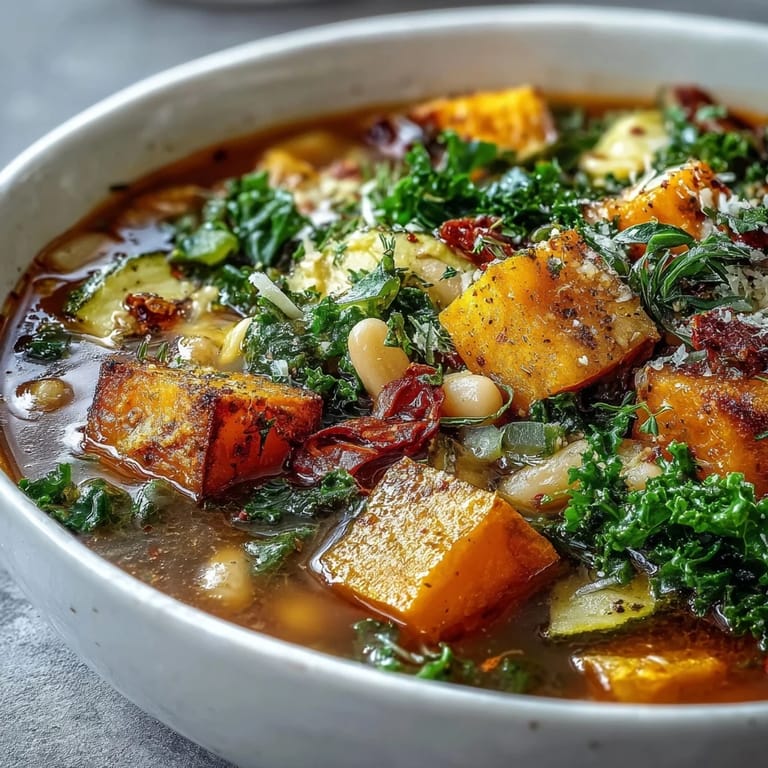
- Fish out the bay leaf, then taste your soup and adjust salt and pepper until it makes you happy. Ladle it into bowls, top with Parmesan and fresh parsley if you like, and serve alongside crusty bread for soaking up every drop.
 Save to Pinterest
 My daughter asked why I was making the same soup again, and I realized I'd already filled her lunch container that morning without her even noticing. There's something quietly powerful about feeding people something so complete and wholesome they forget to complain.
Why This Soup Feels Different
Most soups try too hard or not hard enough. This one exists in a perfect middle place where the vegetables matter enough to taste real, but the broth and beans make it satisfying enough that you're not picking through looking for substance. The butternut squash melts slightly at the edges and thickens the broth naturally, so there's no need for cream or any apologies.
The Timing Actually Works
Forty minutes of cooking sounds reasonable until you're standing there hungry, but here's the truth: most of that time is hands-off simmering while the flavors marry and the vegetables soften. The active work takes maybe ten minutes total, which means you can start this after work and be eating within an hour. I've learned to set a timer on my phone and walk away instead of watching the pot, which somehow makes everything taste better because I'm not anxious about it.
Ways to Make This Your Own
The beauty of minestrone is that it's forgiving. I've made it with spinach instead of kale on lazy nights, added mushrooms because they were in my drawer, and even stirred in a Parmesan rind halfway through simmering to deepen the umami—which I learned from a cookbook written by someone's grandmother, and it genuinely elevated everything.
- If you need it gluten-free, swap the pasta for extra white beans or chickpeas and nobody will notice the difference.
- Add a splash of balsamic vinegar in the last two minutes if the soup feels like it's missing something you can't name.
- Make a double batch and freeze it in portions because you'll thank yourself when a cold day arrives.
 Save to Pinterest
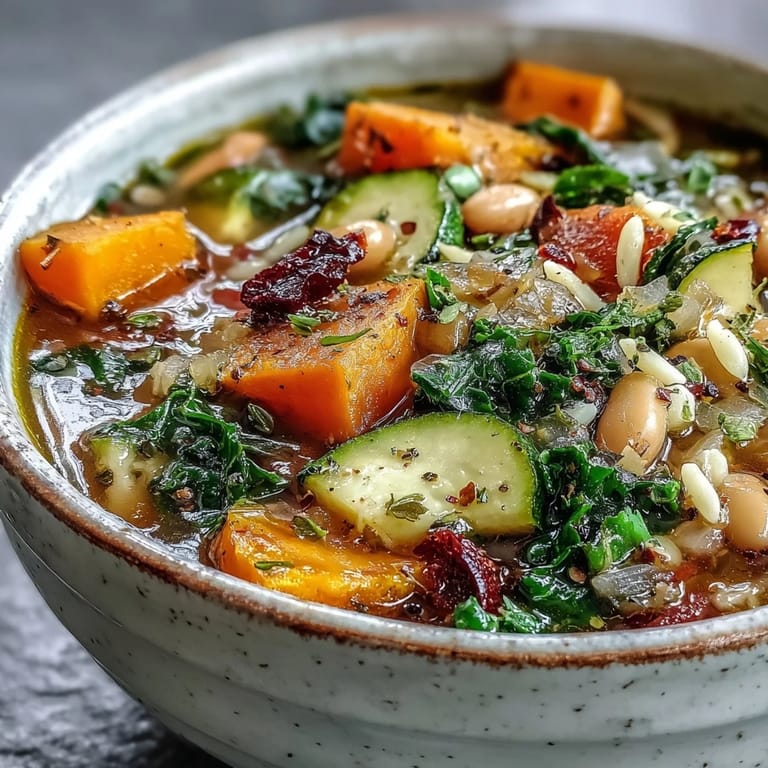
 This soup is the kind you make when you want to feel like you're taking care of people, including yourself. It asks for very little but gives back quietly and generously.
Recipe Q&A
- → Can I make this minestrone ahead of time?
Yes, minestrone tastes even better the next day. Prepare fully and refrigerate for up to 3 days. The pasta will absorb liquid, so add extra broth when reheating. For best results, cook pasta separately and add just before serving.
- → What can I substitute for butternut squash?
Sweet potato, pumpkin, or acorn squash work beautifully as alternatives. Cube them similarly and expect comparable cooking times. Each brings its own subtle sweetness to the broth.
- → How do I make this soup heartier?
Increase the pasta or beans, add more vegetables like potatoes or green beans, or stir in cooked Italian sausage. A drizzle of pesto or extra olive oil before serving also adds richness.
- → Can I freeze winter minestrone?
Absolutely. Cool completely and freeze in airtight containers for up to 3 months. Note that pasta texture may soften after freezing. Consider cooking pasta fresh when reheating for optimal texture.
- → What type of pasta works best?
Small pasta shapes like ditalini, elbow macaroni, or small shells are traditional choices. They cook evenly in the broth and are easy to eat with a spoon. Orzo or broken spaghetti also work well.
- → How can I add more protein?
Beyond the cannellini beans, try adding chickpeas, lentils, or white beans. For non-vegetarian options, cooked chicken, turkey, or Italian sausage complement the vegetables perfectly.